Introduction
Why do my shoelaces always twist?
Ever tied your shoes perfectly—only to look down a few minutes later and see your laces twisted, messy, or coming undone?
If you’ve been asking, “Why do my shoelaces always twist?”—you’re definitely not alone. This small but frustrating problem affects millions of people every day, whether you’re walking, running, or just standing.
The good news? It’s not random—and it’s completely fixable.
In this updated 2026 guide, you’ll learn:
- Why shoelaces twist and curl
- The biggest mistakes people make (without realizing it)
- Simple fixes that work instantly
- The best tools and shoelaces to prevent twisting
Let’s break it down and solve this problem for good.
❓ Quick Answer: Why Do Shoelaces Always Twist?
Shoelaces twist mainly because of
- Round lace shape (low friction = more rotation)
- Weak knots like the granny knot
- Constant movement while walking or running
👉 Switching to flat laces and using a square knot can instantly reduce twisting.
Why Do Shoelaces Always Twist?
1. Round Lace Shape = Easy Twisting
Most shoelaces are round or cylindrical, which makes them:
- Smooth
- Low-friction
- Easy to rotate
That’s why they twist so easily during movement.
👉 Flat laces solve this by:
- Increasing surface area
- Creating more grip
- Staying aligned longer
2. The Knot Problem (Granny Knot vs. Square Knot)
One of the biggest hidden causes is how you tie your laces.
❌ Granny Knot (Common Mistake)
- Laces cross in the same direction.
- Unstable and loose
- Twists and unties quickly
✅ Square Knot (Correct Way)
- Laces cross in opposite directions
- Balanced and secure
- Resists twisting and loosening
👉 Small change, big difference.
3. Walking & Running Forces
Every step you take:
- Pulls and stretches your laces
- Creates impact on the knot
- Causes gradual twisting and slipping
Over time, this leads to:
- Curling laces
- Loose knots
- Uneven tension
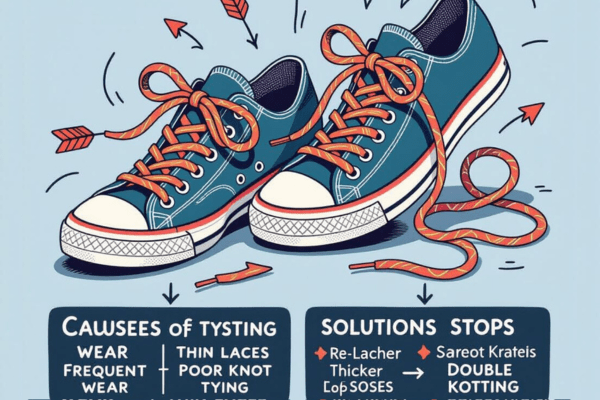
How to Fix Twisted Shoelaces
If your laces are already twisted, here’s how to fix them quickly:
Step 1: Remove the Laces
Take them out completely for full control.
Step 2: Lay Them Flat
Place on a clean surface and identify twisted sections.
Step 3: Untwist by Hand
- Hold one end
- Rotate in the opposite direction
- Smooth with your fingers
Step 4: Use Water or Light Heat
- Slightly dampen or use low heat.
- Helps relax fibers and remove stubborn curls
Step 5: Re-Lace Properly
Make sure laces sit flat in each eyelet—no hidden twists.

Best Ways to Prevent Shoelaces from Twisting
✔️ 1. Switch to Flat Shoelaces
- More friction
- Better grip
- Less twisting
✔️ 2. Use the Right Knot
- Square knot = everyday use
- Surgeon’s knot = extra hold
✔️ 3. Double Knot for Security
Adds an extra layer of protection against:
- Loosening
- Twisting
- Slipping
✔️ 4. Keep Laces Aligned Daily
Simple habits matter:
- Check laces before wearing
- Pull evenly from both sides.
- Fix twists early
✔️ 5. Replace Old Laces
Worn-out laces:
- Lose grip
- Twist more easily
👉 New laces = instant improvement
Best Tools & Accessories to Stop Shoelace Twisting
🔒 Lace Anchors (Lace Locks)
One of the best 2026 solutions.
Why they work:
- Lock laces in place
- Prevent movement inside eyelets
- Stop twisting at the root.
Best for:
- Runners
- Kids
- Busy people
- Everyday sneakers
👟 Best Shoelaces for No Twisting
1. Flat Shoelaces
✔️ Best overall choice
✔️ High friction = less movement
2. Textured Shoelaces
✔️ Better grip
✔️ Ideal for sports & training
3. Elastic No-Tie Laces
✔️ No knots needed
✔️ Stay tight all day.
✔️ Perfect for convenience
Complete Anti-Twist Shoelace Setup
Follow this system for guaranteed results:
1️⃣ Use flat or textured laces.
2️⃣ Add lace anchors (optional but powerful).
3️⃣ Tie a square or surgeon’s knot.
4️⃣ Finish with a double knot.
5️⃣ Avoid granny knots completely
👉 This combination almost eliminates twisting entirely.completely.
(FAQs)
1. Why do shoelaces curl even after tying carefully?
Even if you tie your shoelaces carefully, shoelace twisting and curling can still occur due to the shape of the lace, especially if you’re using round or cylindrical laces. These have low friction and tend to rotate inside the eyelets. Additionally, if you’re unknowingly tying a granny knot, your laces may look tight at first but will loosen and twist as you move throughout the day.
2. Are flat shoelaces better than round laces to prevent twisting?
Yes, flat shoelaces are generally much better for preventing twisting. Their wider surface area creates more friction against the shoe’s eyelets, which helps keep them straight and secure. If you’re wondering why your shoelaces always twist, switching to flat laces is one of the easiest and most effective solutions.
3. Can special laces or accessories stop twisting completely?
While no solution is 100% foolproof, using special shoelaces like textured flat laces or elastic no-tie systems can significantly reduce or even eliminate shoelace twisting. Adding tools like lace anchors to prevent twisting ensures your laces stay locked in place, improving both function and appearance.
4. What is the best way to tie shoelaces to avoid twisting?
Avoid tying a granny knot, as it’s known for being unstable and prone to twisting. Instead, learn to tie a square knot or a surgeon’s knot, which are both more secure and self-tightening. Pair this with a double knot for extra hold, especially during high-movement activities like running or hiking.
5. What are the best shoelaces for no twisting?
The best shoelaces for no twisting are typically flat, textured, or elastic laces that maintain alignment and resist slipping. Look for options made with woven materials or added grip, and always avoid overly smooth or round laces, which twist more easily.