Introduction
Best shoes for hiking the Grand Canyon can make the difference between an unforgettable adventure and a painful experience. With steep descents, loose rocks, and extreme heat, this trail demands more than just regular sneakers. Many hikers struggle to choose between trail runners and hiking boots—but picking the right one is crucial for comfort, safety, and performance. In this guide, you’ll discover the key differences, pros and cons, and how to choose the perfect footwear for your Grand Canyon hike.
Why Shoe Choice Matters in the Grand Canyon
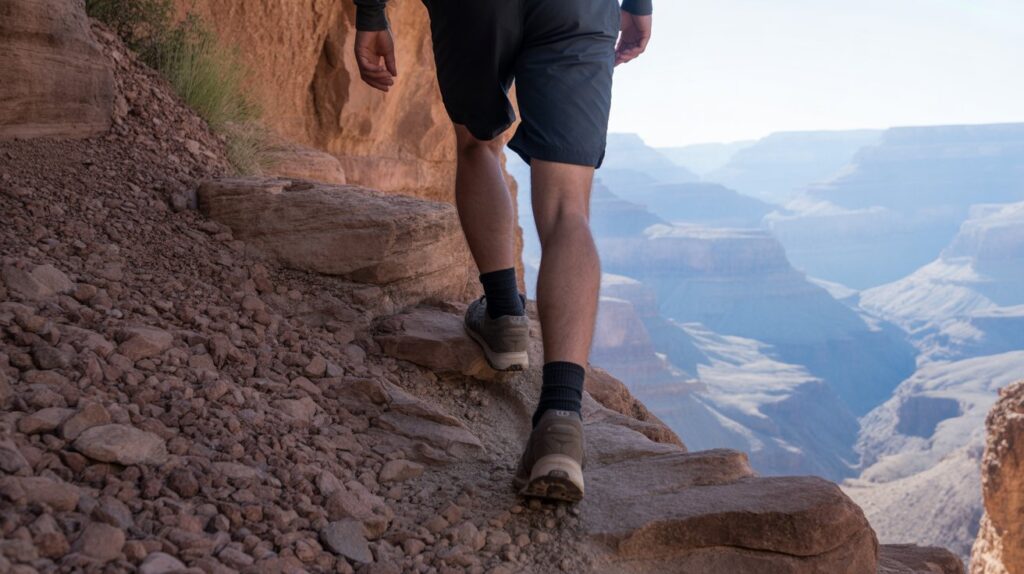
The Grand Canyon isn’t just another hiking trail. You’ll face:
- Steep descents and climbs
- Loose rocks and dusty paths
- Extreme heat (especially in summer)
- Long hiking distances
Shoes designed for rough terrain—like trail runners and hiking boots—offer better traction, cushioning, and protection than regular sneakers.
Trail Runners vs Hiking Boots
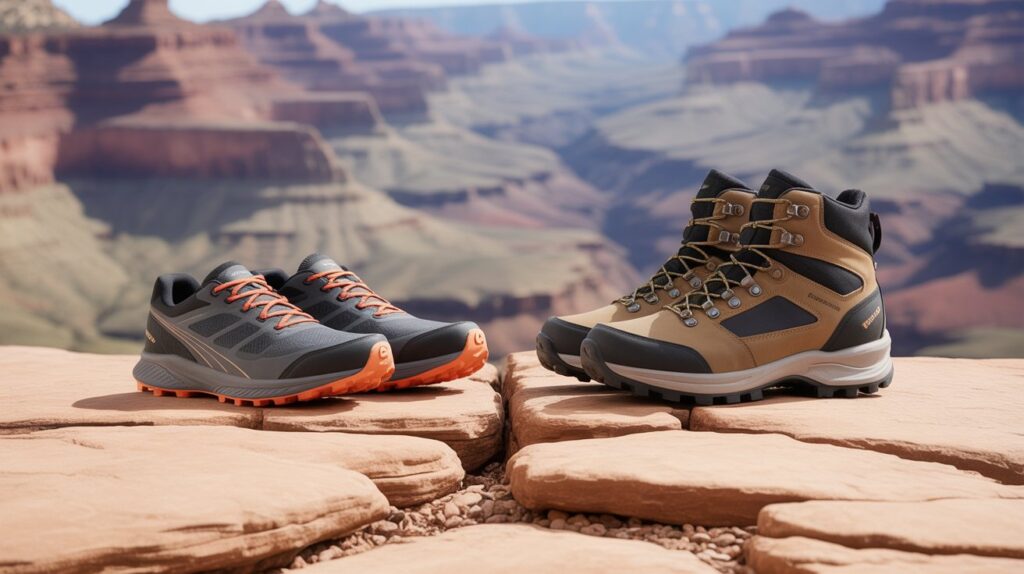
| Feature | Trail Runners | Hiking Boots |
|---|---|---|
| Weight | Lightweight | Heavier |
| Breathability | High | Moderate |
| Ankle Support | Low | High |
| Comfort | Very comfortable | More structured |
| Durability | Moderate | High |
| Best For | Day hikes, speed | Long hikes, heavy loads |
Trail Running Shoes: Lightweight & Fast
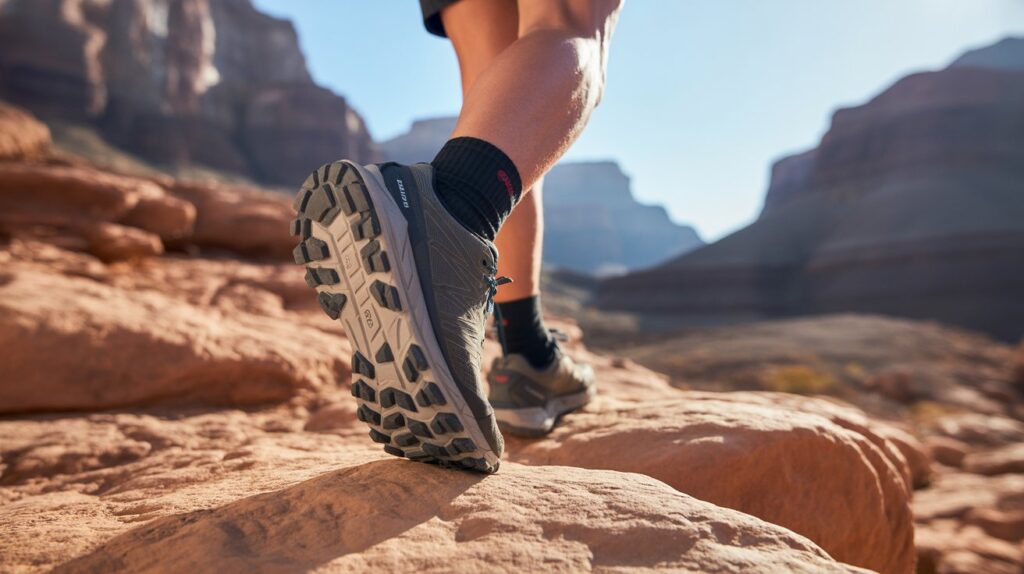
Trail running shoes are built for speed and agility on rough terrain. They typically have strong grip, cushioning, and flexible designs.
✅ Pros
- Lightweight (less fatigue over long distances)
- Highly breathable (perfect for hot canyon weather)
- Comfortable right out of the box
- Dry quickly if wet
Trail running shoes are specifically designed for rugged trails, with thicker outsoles and better traction than road shoes.
❌ Cons
- Less ankle support
- Wear out faster on rocky terrain
- Not ideal for heavy backpacks
👉 Best For:
- Day hikes (like South Kaibab or Bright Angel)
- Experienced hikers
- Hot weather conditions
Hiking Boots: Support & Protection
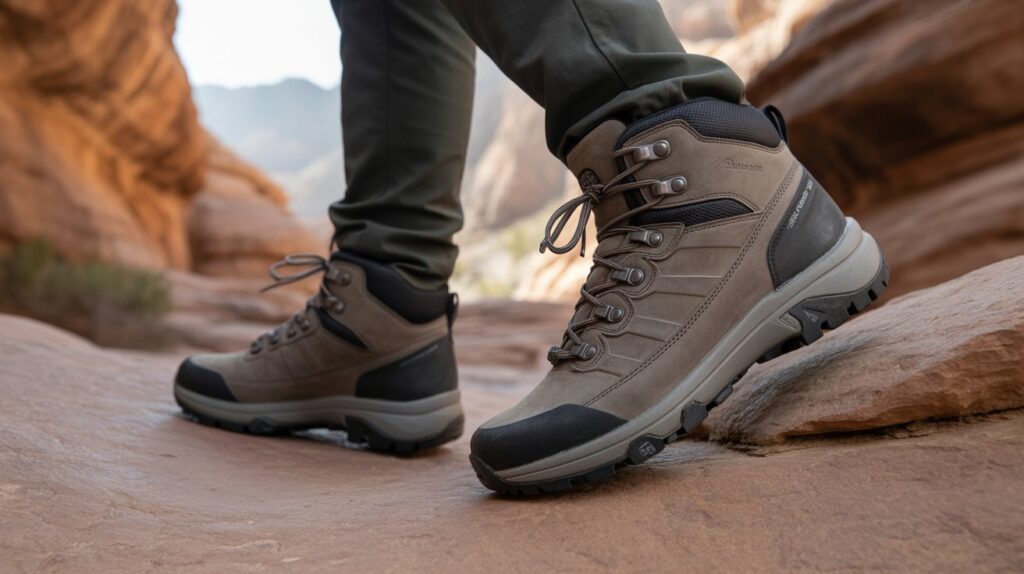
Hiking boots are more structured and designed for stability and protection.
✅ Pros
- Strong ankle support (reduces injury risk)
- More durable on rocky terrain
- Better for carrying heavy loads
- Added protection from sharp rocks
Hiking boots are built for tougher terrain and often include waterproof materials and reinforced construction.
❌ Cons
- Heavier (can cause fatigue)
- Less breathable (can feel hot)
- Require break-in time
👉 Best For:
- Multi-day hikes
- Carrying heavy gear
- Beginners who need extra stability
Which Is Better for the Grand Canyon?
Choose Trail Runners If:
- You want lightweight comfort
- You’re doing a day hike
- You prefer speed and flexibility
- You’re hiking in hot weather.
👉 Many modern hikers prefer trail runners because they reduce fatigue and keep feet cool.
Choose Hiking Boots If
- You’re carrying a heavy backpack.
- You need ankle support.
- You’re doing multi-day hikes
- You prefer extra protection
👉 Boots are still the safer option for beginners or challenging conditions.
Real Hiker Insight (From Community Experience)
From hiking communities on Reddit:
“Trail runners are lighter and breathable… but hiking shoes feel more stable with heavy loads.”
“Trail running shoes are fine for day hikes, but boots are better for long or heavy trips.”
This highlights a key truth:
👉 There is no single “best” option—only what’s best for your hike.
Best Shoes for Hiking the Grand Canyon
Here are popular choices for both categories:
Trail Runners
- HOKA Speedgoat
- Altra Lone Peak
- Salomon Sense Ride
Hiking Boots
- Salomon X Ultra Mid
- Merrell Moab
- KEEN Targhee
These models are known for grip, comfort, and durability on rough terrain.
Final Thoughts
Finding the best shoes for hiking the Grand Canyon ultimately comes down to your hiking style, experience level, and the type of adventure you’re planning.
If you value lightweight comfort, breathability, and speed—especially for day hikes—trail runners are a great choice. On the other hand, if you need extra stability, ankle support, and durability for longer or more demanding hikes, hiking boots are the safer option.
There’s no one-size-fits-all answer. The “best” shoe is the one that fits you well, feels comfortable over long distances, and matches the conditions you’ll face on the trail.